

Why Automation Testing?
Improve Software Testing Efficiency with AI-Powered QA Automation
Repeated regression checks, manual test preparation, and disconnected reporting can slow QA workflows. Test automation helps teams execute repeatable checks consistently and obtain faster feedback; AI assistance extends the workflow to test preparation, validation, and analysis.
Test automation helps organizations execute repeatable test cases more efficiently, improve consistency, and obtain faster feedback during software development and maintenance.
With our QA Automation AI Agentic Workflow, organizations can extend these benefits by connecting AI-assisted test preparation, test data generation, quality validation, automated execution, and reporting.
Common Challenges in Disconnected QA Workflows
Traditional QA workflows often involve considerable manual effort across several activities:
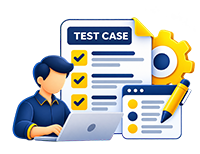
Manual Test Case Preparation
QA engineers interpret requirements and create test cases for application functionality, validation rules, and business workflows.

Automation Script Development and Maintenance
Automation teams must develop, review, and update test scripts as application requirements and interfaces change.
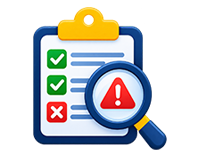
Manual Failure Analysis
QA engineers investigate failed tests using execution results, application behaviour, logs, and other available evidence.

Time-Consuming Test Data Creation
Testing different input conditions, boundary values, and related records requires careful data preparation.

Repeated Regression Testing
Application updates require existing functionality to be tested again to identify potential regressions.

Limited Testing Visibility
Preparing reports and connecting requirements to test results can require additional coordination.
With AI Agentic QA Automation: A Connected Testing Workflow
Our AI-assisted test automation solution supports a structured workflow that connects the major stages of software testing.
- Requirement analysis: Identify application modules, business rules, user roles, and expected behaviour.
- Test scenario generation: Prepare positive, negative, and business workflow test scenarios.
- Test data preparation: Create relevant data for approved testing conditions.
- Quality validation: Review scenarios for completeness, consistency, and coverage gaps.
- Automated test generation: Convert approved scenarios into automated web tests.
- Test execution and analysis: Execute tests and analyze available evidence to help investigate failures.
- Test reporting: Review execution status, coverage information, and unresolved issues.
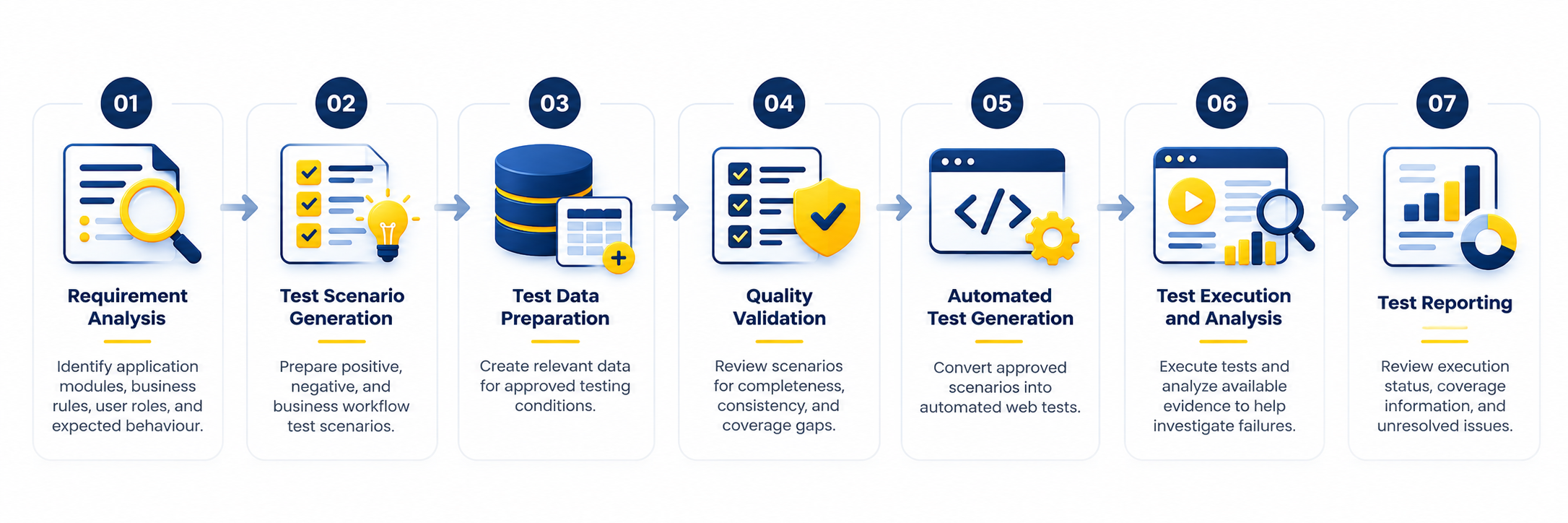
Appropriate quality checkpoints and human review help maintain oversight of critical testing activities.
After Automation: Better Testing Visibility and Traceability
Following automated test execution, teams can review structured results to understand what was tested, which scenarios passed or failed, and which issues require further investigation.
- The workflow supports visibility into:
- Automated test execution results.
- Business workflows and scenarios covered.
- Failure screenshots, logs, and execution traces where available.
- Potential causes of test failures.
- Coverage gaps and unresolved issues.
- Links between requirements, test scenarios, and results.
This information supports more informed decisions by QA engineers, developers, project managers, and product owners.
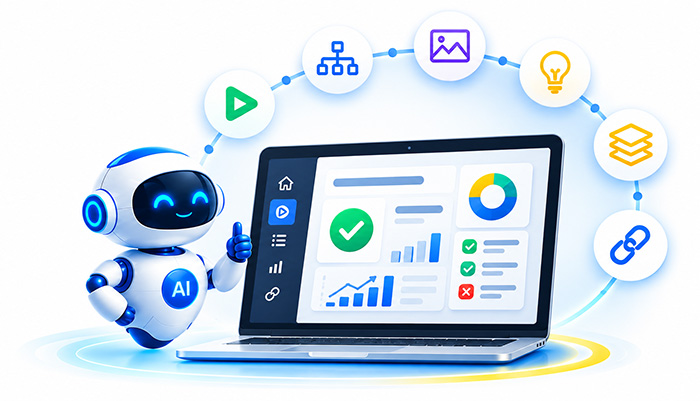
Appropriate quality checkpoints and human review help maintain oversight of critical testing activities.
Business Benefits of AI Test Automation
Reduce Repetitive QA Effort
Streamline recurring activities in test scenario preparation, data creation, execution, and reporting.
Improve Test Coverage
Address more business rules, input validations, permissions, and connected application workflows.

Support Faster Testing Cycles
Reduce preparation overhead and support efficient execution of repeatable automated tests.
Improve Testing Consistency
Apply structured quality checks to testing scenarios and automation assets.
Identify Issues for Earlier Investigation
Highlight failed tests, missing conditions, and potential coverage gaps for review.

Simplify Regression Testing
Reuse automated tests to validate existing functionality following application changes.

Improve QA Reporting
Provide clearer visibility into execution results, coverage, and unresolved issues.
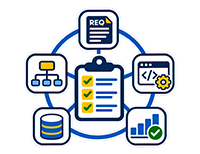
Strengthen Test Traceability
Connect requirements, test scenarios, test data, automation, and results.
Move Beyond Traditional Test Automation
AI-powered QA automation can help connect activities that are often handled separately, from requirement understanding to final test reporting. Our QA Automation AI Agentic Workflow supports this connected approach while retaining appropriate human review and control.